Connected Care Weekly | 1st October 2026
CT-155, the schizophrenia app I wrote about, now has peer-reviewed Phase 3 results. Plus: what families should ask about TMS when depression won’t lift.
Connected Care Weekly: 28 September 2026
This week: why a UCSF psychiatrist rejects “AI psychosis,” magnetic stimulation for schizophrenia’s thinking symptoms, and brain stimulation moving into the home. Caregivers, take note.
Diabetes Got 35.3%. Schizophrenia Got a Shrug.

Diabetes got a market-share number. Schizophrenia got a shrug — one throwaway clause in a $39 billion “digital health” report, recycled across seven press releases without a single data point. If they won’t even count us, why would they build for us?
Connected Care: Special Announcement

Teva’s new clinician site says most schizophrenia patients stop taking daily pills — and most relapse anyway. Here’s why long-acting injectables deserve an earlier conversation.
Connected Care Weekly: 10 September 2026
Nearly 2 in 3 young adults face mental health distress. 1 in 8 teens now uses AI chatbots for support — up 50% in under a year. Congress is finally responding.
What a New Pediatric Crisis Study on Technology Tells Caregivers of People With Serious Mental Illness

Shocking new data: nearly one in five pediatric psychiatric crises now involve digital media, and those cases are twice as likely to end in hospitalization. Caregivers, take note right now.
“Connected Care” Accepted by the Library of Congress!
From a practical guide to a place in history: Connected Care has been accepted into the Library of Congress collection. I’m thrilled that this resource on technology, mental health, and everyday connection will be preserved for future readers.
Connected Care: Avatar Therapy Special Edition

27 years of hearing voices that said she wasn’t worth living as a human being. Then she put on a VR headset and talked back. Five years later: silence, finally.
Connected Care Special Edition: Neurotech
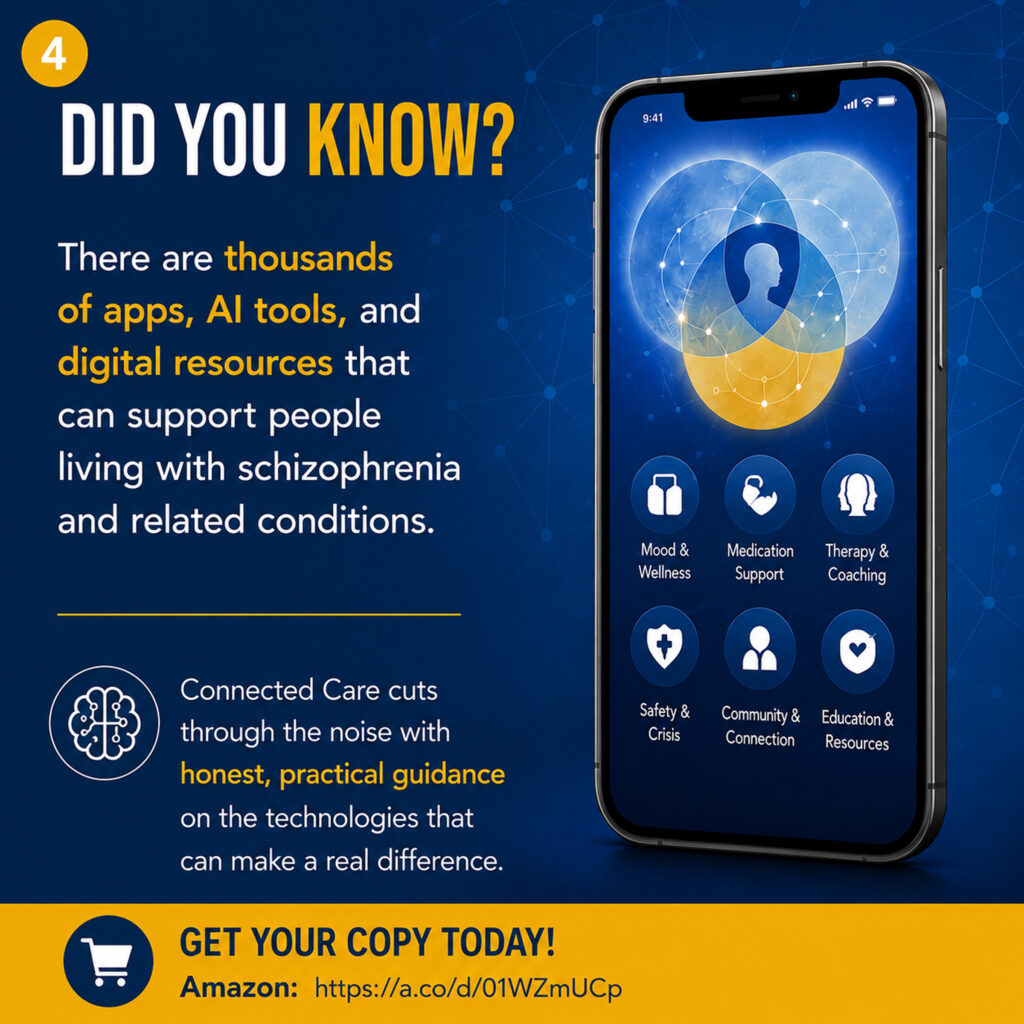
Neurotech is moving fast. What is it? Why do you care…if your loved one has serious mental illness…you might want to know.
Connected Care: Regulatory Special Edition
Five states ban AI therapy. Others allow it with rules. Nobody agrees. Meanwhile, 1 in 6 adults — 1 in 4 under 30 — already quietly use AI for mental health help.